
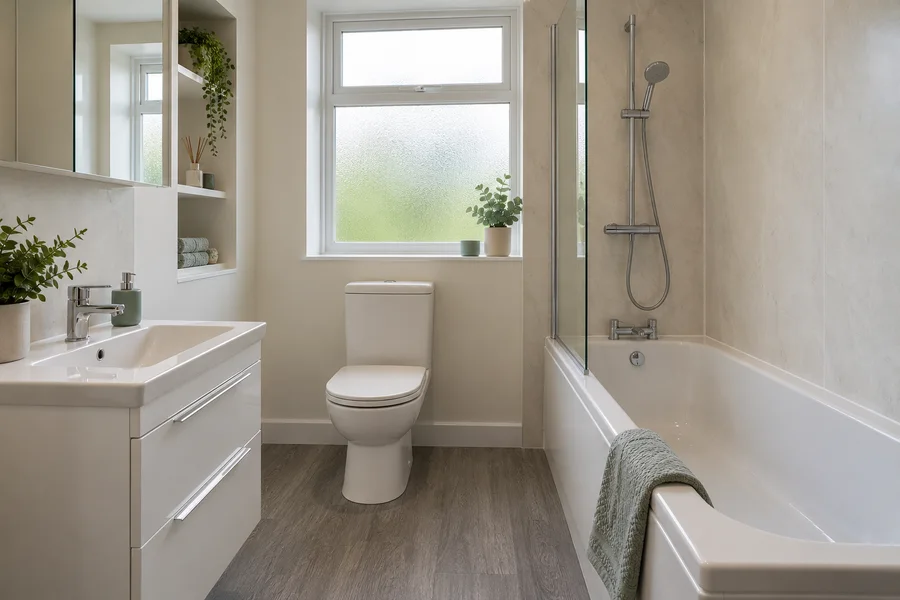
A realistic bathroom budget depends on the room and the work. Instead of treating a headline price as a promise, work through the choices that can change your quotation.
Start with the improvement you are buying
Name the bathroom problems you want the spending to solve. A shower that is awkward to use, nowhere for toiletries or a worn suite gives the project a clearer purpose than a general wish for something new. Rank those priorities with the household. If choices later compete for money, return to that list. Our bathroom quotation service brings the selected products and installation into an itemised proposal, so we can discuss the complete refit against the improvements that matter to you.
Choose complete replacement or a smaller change
Decide which parts of the bathroom need replacing and which could remain. Keeping a fitting can still require work around its edges or temporary removal and refitting. A bath-to-shower conversion also includes more than a tray if it exposes unfinished surfaces. Describe the intended result before comparing products. Our whole-room planning checklist helps you list the work you need. It is easier to judge a budget once the proposed job is clear than after several unrelated products have already been bought.
See how layout affects the work
Moving a toilet, basin or shower can change water and drain routes, walls and floors. Compare the benefit of a move with a layout that keeps suitable positions. Sometimes different furniture or a screen opening solves the problem without the same work; in another room the move may deliver the improvement you need. Ask for the actual proposal to be assessed and priced rather than assume all moves are expensive or all existing connections can remain. Keep the selected layout with the product choices.
Settle the main product choices
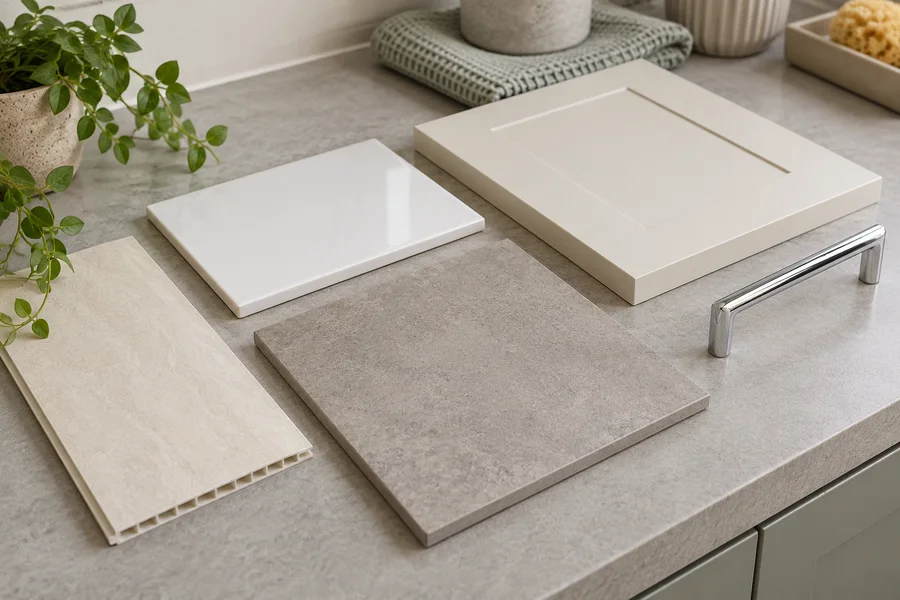
The bath or tray, shower, basin, toilet and furniture make up much of the visible bathroom. Compare exact sizes and models with their required accompanying parts. A cabinet price may not include the tap or drain fitting, and a shower display can show accessories sold separately. If a choice is still open, ask what amount is included in the proposal and update it when the product is selected. Keeping product references beside those figures helps you see how the total changes as decisions become firm.
Include preparation underneath the new finish
Old finishes may need removing and surfaces may need repair before new material can be fitted. Tell the fitter about damage, leaks or loose areas you have noticed. Some conditions cannot be confirmed until the old room is opened up, so ask which preparation is already included and how further repair would be assessed. A lower product price does not remove that work. Allow for making the walls and floor ready as well as buying the suite.
Compare decorative options at their fitted cost
A different tile layout, an extra border or another furniture position can change labour as well as material quantities. Ask how an optional detail affects the complete proposal before deciding it is a small upgrade. Keep the main job price separate from options you have not chosen. Our wall panels and tiles guide explains the finish and coverage decisions. If you remove an option, update the current product and work list so the order reflects that decision too.
Plan the practical costs around fitting
Ask what the quote includes for delivery, removal of old fittings and the smaller tasks around the finished bathroom. Note anything you need to arrange separately instead of assuming it has no effect on the project. If this is your only bathroom, discuss where you will wash and which facilities will be available during the work. Include access information before products are ordered. These practical details do not create one standard extra charge, but they help you understand what the proposed job requires from you.
Keep a way to approve unexpected work
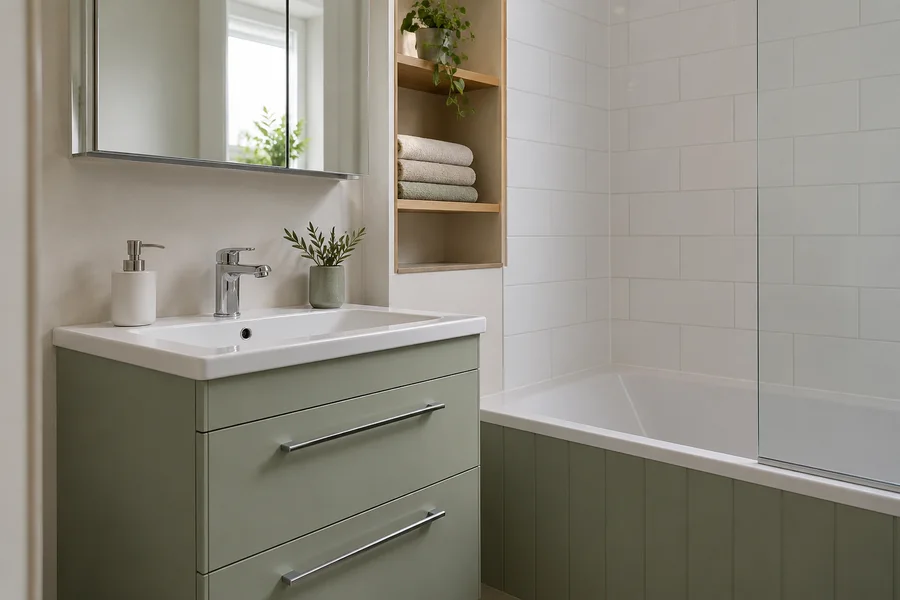
Discuss how a finding behind old tiles or flooring would be shown and explained. Ask for its price, proposed work and effect on dates before approval. Keep a contact available during fitting if possible. Ask which repair costs can be confirmed after the old surfaces have been removed. Use the condition information available and the agreed process for further findings. The important point is to keep the original price distinct from additional work you have not yet been asked to accept.
Simplify choices without hiding missing work
If the proposal is above budget, discuss which product range, accessory or decorative detail can change. Retain a clear description of the preparation and fitting needed for the revised choice. A smaller finished area is a different job, not automatically the same room at a saving. Make sure you still like the result and understand any task left outside the quote. Revisiting priorities is more useful than accepting a vague reduction that no longer identifies what will be supplied and completed.
Why discuss a complete refit with us?
We design, supply and install bathrooms in Glasgow, so the furniture, bathing choices, surfaces and fitting can be discussed together. Tell us your postcode, present room and main priorities. We can work through the selected products and proposed work before an itemised quote is agreed. Your quote is based on the fittings and work needed in your own room. Use the final proposal to see what is included, which choices remain open and what the next decision is before the bathroom is ordered.
Your checklist
- Agree the layout before pricing finishes
- Ask how hidden work is handled
- Compare a simpler product and work list