

A clear fitting plan helps you prepare the household. Discuss what will happen at each stage, especially if this is the only bathroom in the home.
Discuss each essential facility separately
Tell the fitter whether there is another toilet, basin, bath or shower and whether everyone can use the alternative. Each facility may be interrupted at a different stage. Ask about the proposed job rather than rely on a general reassurance that the bathroom will remain usable. Our bathroom installation service includes discussing those arrangements with the agreed work. Knowing which daily needs depend on this room gives the household a practical starting point before dates and product choices are confirmed.
Understand the work and waiting periods
Removal, preparation, connections, surfaces and fitting do not all happen at once. Products and materials may also need time before the next stage or before they can be used. Ask which stages affect your facilities and distinguish the wait for a start date from time working in the room. The schedule needs to relate to the actual products and job. Avoid building household plans around a fixed online duration that does not describe your layout, repairs, access or the particular finish being installed.
Agree the carrying route before delivery
Walk from the entrance to the bathroom with the proposed bath, screen or panels in mind. Explain stairs, tight turns, shared landings and any restrictions that affect access. A product's packaged size can matter as well as its installed dimensions. Ask who checks an uncertain route before ordering. Keep any arrangements for a shared entrance with the delivery information. This helps avoid treating the bathroom door as the only opening that needs considering when every large product must first pass through the rest of the building.
Keep deliveries out of daily routes
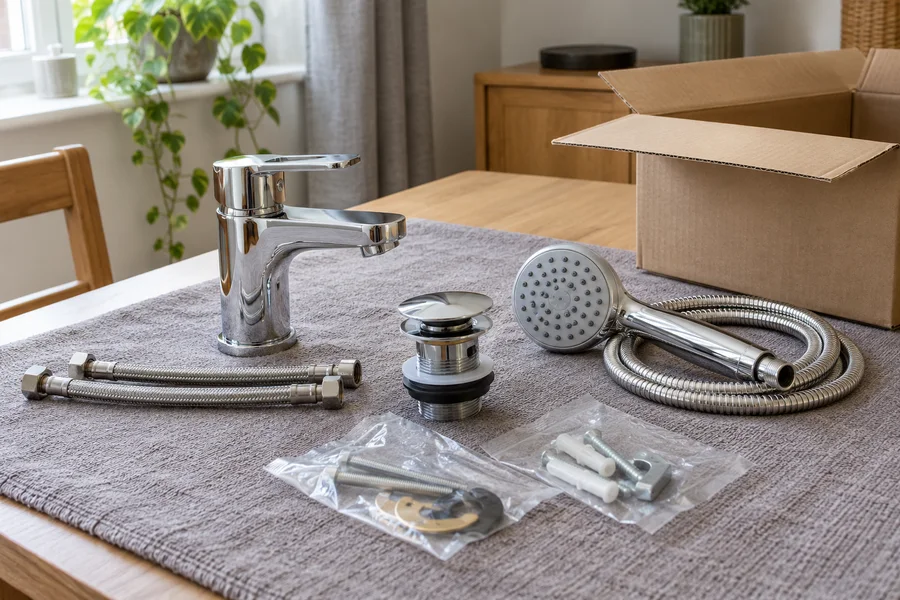
Agree where products can wait without blocking exits, stairs or the rooms the household needs. Confirm who receives and checks them for the right model, damage and missing parts. Retain packaging as required while those checks are completed. If you supply an item, provide its details early enough for the fitter to assess it. A carton arriving is not the same as the correct fitting being ready. Clear responsibilities for deliveries help you plan the space around the work rather than fill the hallway with unchecked boxes.
Clear belongings and set aside daily essentials
Remove movable items from the bathroom and any agreed surrounding area. Before packing them away, make a small kit of the toiletries and towels needed during fitting. Store medicines and cleaning products suitably. If another bathroom is available, leave it usable rather than fill its floor with the removed belongings. Ask which cupboard or nearby furniture also needs clearing. These small preparations reduce repeated visits towards the work area for things that the household still needs while the bathroom itself is unavailable.
Protect occupied rooms and household routines
Discuss how floors and nearby belongings on the route will be protected and what you need to move yourself. Explain children, pets, home working or particular access needs before the start. Fitting uses tools and makes noise, so do not assume a neighbouring room will be suitable for an important call without discussion. Keep the work area separate as advised and ask before entering an unfinished space. The aim is to make practical arrangements for the home you are still living in, not to pretend the job causes no disruption.
Make product decisions before the work needs them
Confirm the main suite and finish choices before the relevant preparation. Ask when details such as mirror, shelf and towel positions are needed. Changing a model can affect plumbing, wiring or deliveries, even if the replacement looks similar. Our bathroom planning checklist helps you put these choices in order. Keep the actual model references available so the fitter does not reach a stage that depends on a decision still sitting in a different email or an old product list.

Have one clear contact for decisions
Agree who can approve a changed product or extra repair and how that person can be reached during the day. If several household members are involved, share the current quote and choices so instructions stay consistent. Ask for the proposed work, price and effect on dates before confirming a change. A written record helps when a decision is made by phone while someone is away. The contact arrangement cannot prevent every surprise, but it avoids uncertainty about whether a casual conversation has actually changed the accepted job.
Keep the route usable as work progresses
Old fittings and packaging can occupy space after the first delivery is out of the way. Confirm where they can wait safely and who removes them under the agreed job. Keep shared stairs and exits clear; do not move stored products into those routes yourself. Ask where household movement is suitable while work is unfinished. If the schedule changes, update the arrangements for any affected room. Maintaining the route during the job is different from clearing it once and assuming the space will remain the same throughout fitting.
Make time to return the room to everyday use
Arrange a final walk-through and ask when the bath or shower can get wet. Learn the controls, care requirements and any access points, then record outstanding work with its next step. Our bathroom handover checklist helps prepare those questions. Keep daily items outside the room until the agreed point of use. A job's last visible fitting is not the only thing that matters; the household needs to understand the completed bathroom and any instructions that apply before settling back into its normal routine.
Your checklist
- Discuss the only-bathroom problem early
- Agree delivery and protection arrangements
- Record changes and handover items